
Introducing the Math & Markets Trading Series
Coming soon: A series of books for serious and systematic retail traders
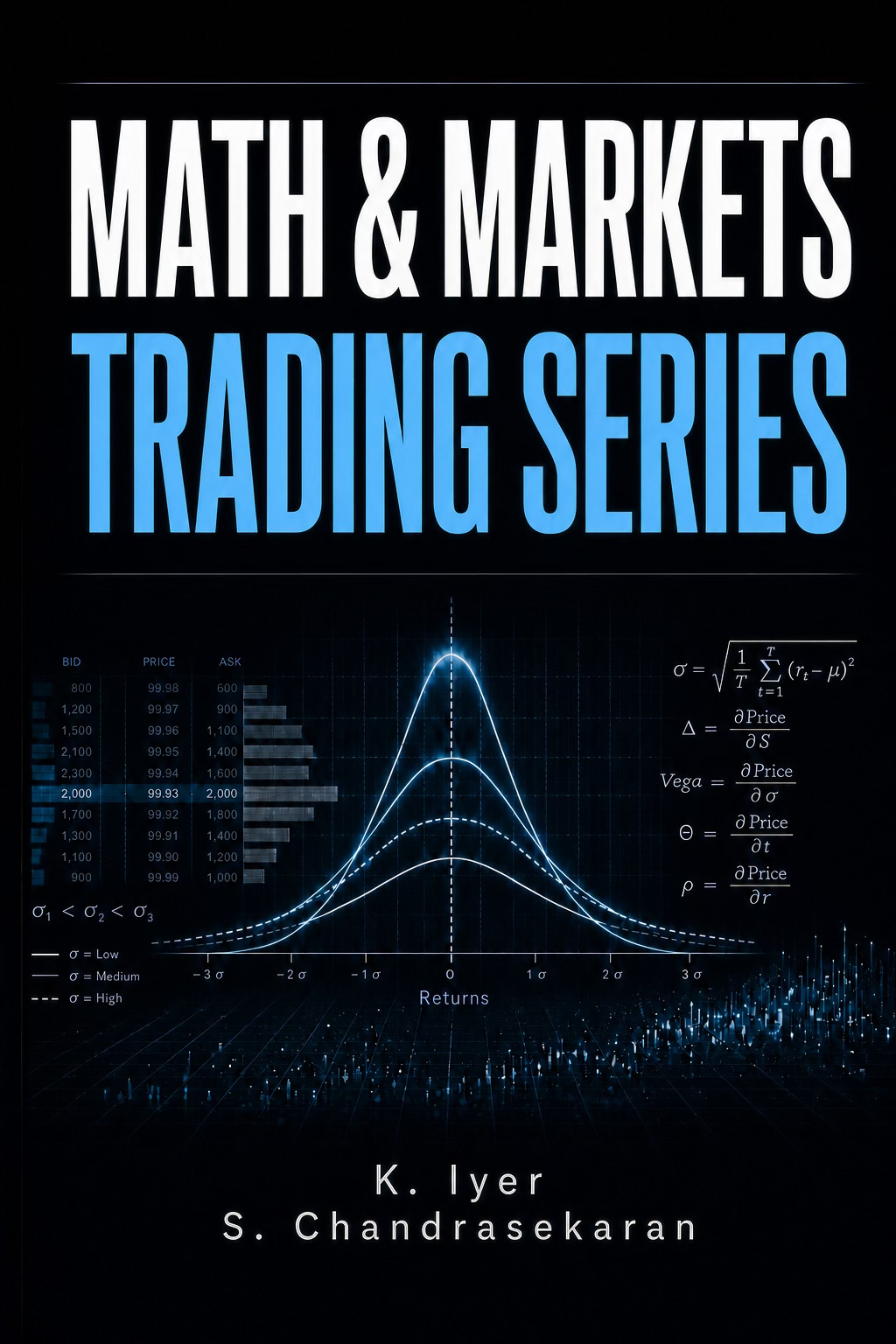
We are launching the Math & Markets Trading Series — a collection of technical books that go deep on specific areas of systematic trading, written for retail traders who want more than surface-level guides. Each book is self-contained, technically rigorous, and built to close the gap between what most retail resources offer and what serious traders actually need to know.
We will also make available interactive charts and other content on our website.
The first book will be launched in Fall 2026.
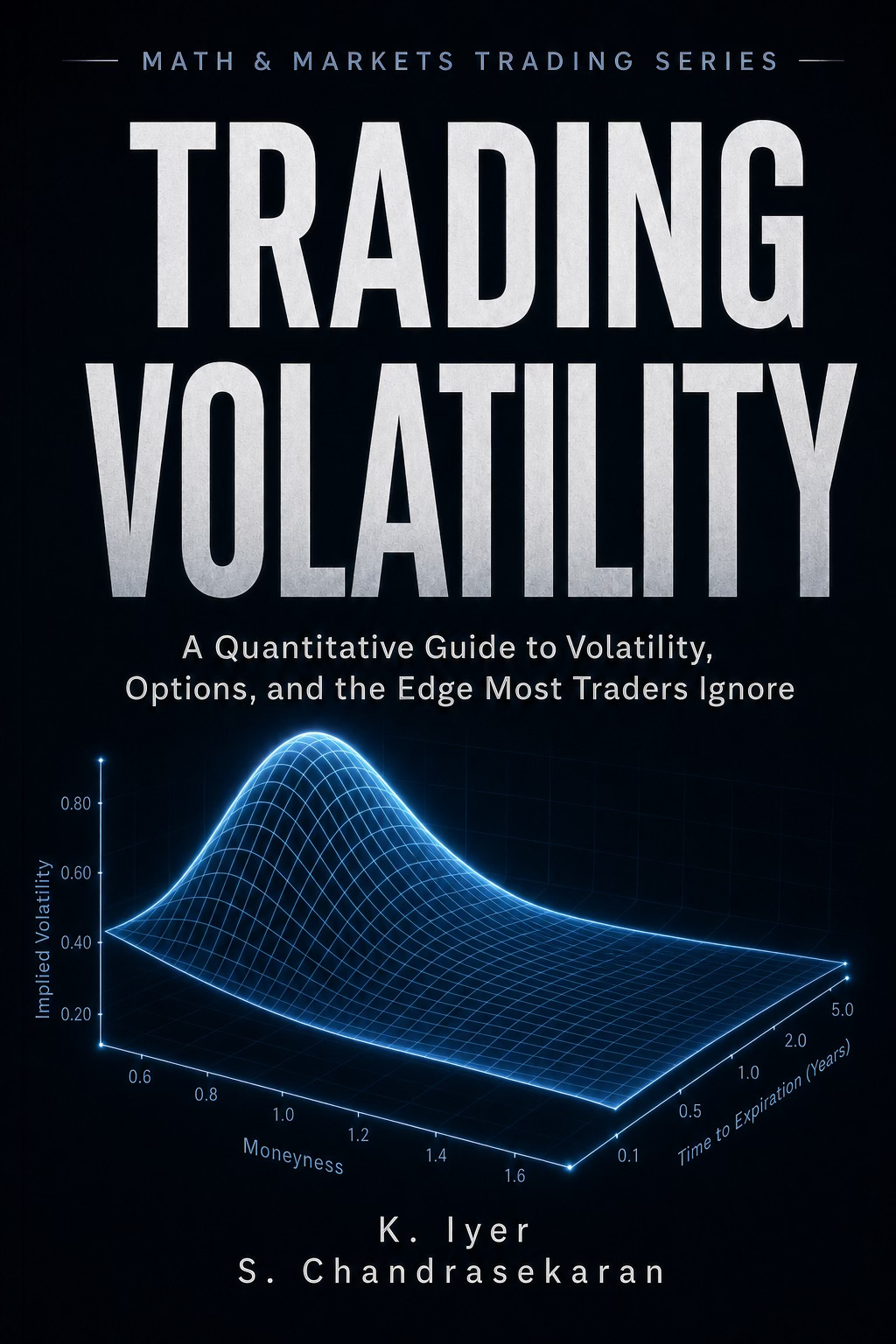
Book 1 — Trading Volatility A Quantitative Guide to Volatility, Options, and the Edge Most Traders Ignore
Most options traders are stuck between retail guides that cover mechanics but not thinking, and academic literature that covers thinking but not practice. This book occupies that gap — from VIX construction and term structure through the Greeks, surface building, 0DTE execution, and smarter hedging, closing with Kelly Criterion applied to asymmetric payoffs.
Book 2 — Regime and Allocation A Quantitative Guide to Regime Detection, Momentum Switching, and Adaptive Allocation
A strategy that works in one environment and fails in another is not a strategy — it is a bet on conditions continuing. This book covers regime detection using Hidden Markov Models, momentum-based switching logic, and the design of the dual allocator that has been built and stress-tested throughout the Substack. The goal is systems that know where they are.
Book 3 — 0DTE: The Complete Playbook 25+ Strategies for Trading Same-Day Options
Same-day options now account for more than half of all SPX volume. Most retail traders using them are doing so without understanding what they’ve walked into. This book is the complete guide: the gamma mechanics that make 0DTE categorically different from every other options strategy, the friction math that kills more approaches than bad strike selection, and twenty-nine strategies — from the standard iron condor to GEX-based positioning and the MOC imbalance play — each with setup, management, failure modes, and sizing. The strategies the internet talks about are here. So are the ones it doesn’t.
Book 4 — Risk, Sizing, and Survival Kelly Criterion, Drawdown Control, and the Mathematics of Staying in the Game
Edge without survival is a slower way to go to zero. This book is about staying in the game: Kelly Criterion and its fractional variants, principled drawdown limits, portfolio correlation, tail risk, and the practical construction of a risk budget. Most traders spend more time on signal than on sizing. This book corrects that.
Book 5 — Reading the World Geopolitics, Factor Models, Alternative Data, and the Trades That Aren’t in the Textbook
The first four books build the methodology. This one applies it — to Venezuela as a geopolitical commodity trade, the SaaS collapse seen through a factor model, the AI infrastructure thesis, gold and silver under macro uncertainty, satellite data on port activity, and Buffett’s portfolio decomposed into quantitative factors. The most accessible book in the series, and the one that shows what systematic thinking looks like applied to markets you recognize.
Book 6 — Crypto as an Asset Class Microstructure, Institutions, and the Systematic Trade
Crypto is not a belief system. It is a market — with regime behavior, volatility structure, and persistent inefficiencies that respond to the same systematic framework as any other tradeable asset class. This book applies that framework to digital assets: how to read the crypto vol surface, how order book dynamics differ from equities and why it matters for entry and exit, how regime detection works when the underlying can move 20% in a session, and how to size positions in a market where correlation to equities is inconsistent and liquidity can disappear. The same tools. A different and more volatile market to apply them to.
Book 7 — Digital Asset Infrastructure Custody, Settlement, and the Institutional Rails
Before you can trade crypto systematically, you have to understand the plumbing — and the plumbing is different from anything in traditional finance. This book covers what serious retail traders need to know about the infrastructure layer: how custody works and why it matters for risk, what on-chain data reveals that price data doesn’t, how decentralized exchanges differ from centralized ones in ways that affect execution, and how the regulatory landscape shapes what strategies are viable and where. Not a guide for building institutional rails. A guide for trading confidently in a market whose infrastructure is still being built.
More in development. The building continues publicly.